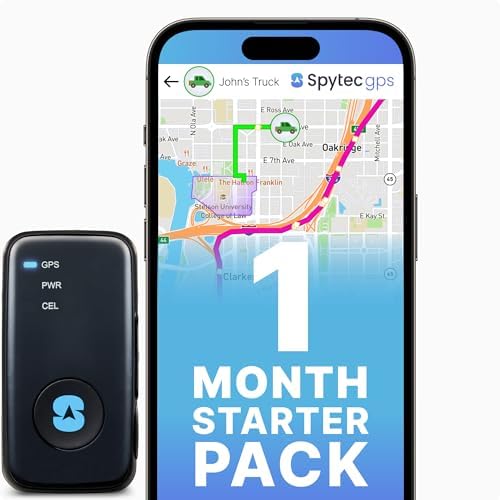
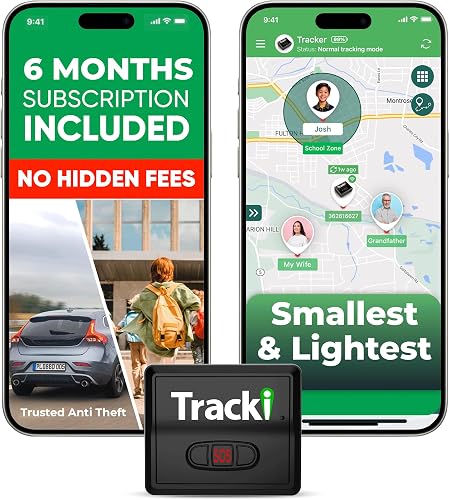
The real difference between these three trackers
Spytec, Tracki, and AirTag 2 solve different problems. Spytec and Tracki combine satellite positioning with cellular service to send location reports to an app. AirTag 2 is an item finder that uses Bluetooth, Ultra Wideband for nearby Precision Finding, and Apple’s Find My network.
If someone asks “should I just get an AirTag 2 instead?” the answer depends entirely on what “tracking” means to you:
- “I need scheduled remote vehicle-location reports” → Compare Spytec and Tracki cellular plans
- “I need a compact cellular tracker with an SOS control” → Tracki is the closer fit
- “I want to find keys, luggage, or another personal belonging” → AirTag 2 is designed for this job and has no tracking-service subscription
Pick by requirement
| Your main requirement | Choose | Why | What you give up |
|---|---|---|---|
| Portable vehicle tracking with fewer charging interruptions | Spytec Atlas | Larger published battery ceiling, 5-second setting, and magnetic case included | Highest monthly service price of the three |
| Small cellular tracker with an SOS control | Tracki 4G | Smaller personal-tracker format, three reporting tiers, and lower prepaid service cost | Standard battery needs more attention, especially on faster tiers |
| Find a personal belonging without cellular service fees | AirTag 2 | No tracking-service subscription and nearby Precision Finding on compatible Apple hardware | No scheduled cellular reports, geofences, or dedicated route history |
Battery life: the biggest practical difference
Battery claims are difficult to compare unless reporting interval and movement are normalized. Spytec states that Atlas Portable can last up to two weeks, while Tracki’s runtime depends on its reporting mode and battery configuration.
Spytec publishes the following guidance for Atlas Portable (source):
| Product | Published reporting behavior | Published battery guidance |
|---|---|---|
| Spytec Atlas Portable | As fast as every 5 seconds | Up to two weeks per charge; Spytec also lists nine days at one hour of movement per day with five-second updates |
| Tracki 4G | Paid plans offer 60-, 30-, or 15-second reports | Varies by reporting mode, movement, coverage, and battery accessory |
For vehicle use, Atlas is the more predictable choice on published battery guidance. Tracki makes more sense when its smaller personal-tracker format and SOS control matter more than a directly comparable maximum-runtime claim.
AirTag 2 battery: Apple specifies a user-replaceable CR2032 coin cell. Battery life varies with use and replacement-battery manufacturer. No cellular subscription is involved because AirTag is not a cellular GPS service.
Monthly cost comparison: the 2-year reality
Both cellular trackers require service. The real total cost depends on reporting interval, prepaid commitment, included hardware, accessories, and renewal terms.
| Cost item | Spytec Atlas | Tracki 4G | Apple AirTag 2 |
|---|---|---|---|
| Hardware | Included with current direct plan | Purchased separately; bundles vary | $29 current list price |
| Accessory | Magnetic weatherproof case included | Check the selected bundle | Optional holders and key rings |
| Month-to-month service | $34.95 | $19.95 at one-minute reports | None |
| 24 months at monthly rate | $838.80 | $478.80 at one-minute reports | $0 service cost |
| Lowest published 24-month service path | $550.80 using two current annual prepayments | $239.40 prepaid for two years at one-minute reports | $0 service cost |
| Reporting trade-off in that path | Atlas includes its published settings, as fast as 5 seconds | The quoted two-year plan uses 1-minute reports | Find My network; no scheduled cellular interval |
Sources: Spytec pricing, Tracki plans, and Apple’s AirTag announcement. Checked July 20, 2026.
Do not compare only the displayed monthly equivalent. Tracki has the lowest 24-month cellular service total in this comparison, but that figure uses a two-year commitment with one-minute reports and excludes its hardware. Spytec costs more, includes the current direct-plan hardware and magnetic case, and offers a five-second setting. AirTag has no service plan because it relies on a different network and serves a different job.
Compare US coverage and 12-month GPS subscription totals →
Compare more battery-powered portable GPS trackers → or see how real-time update intervals affect cost and battery →.
Coverage and reporting limitations
Neither product should be assigned one universal meter-accuracy number across all environments. Satellite view, placement, buildings, cellular coverage, reporting interval, and network delay all affect what appears in the app.
Where Spytec has an edge: Atlas Portable publishes a clear five-second fastest interval and a specific battery scenario for one hour of daily movement.
Where Tracki has an edge: Tracki emphasizes worldwide use and offers an SOS control on its compact personal tracker. Confirm coverage for each destination before depending on it.
AirTag 2 reporting: It uses the Find My network rather than a cellular plan. Its second-generation Ultra Wideband chip improves nearby Precision Finding with compatible Apple devices, but that is not the same as scheduled cellular reporting. (Apple technical specifications)
Size and intended use
| Spytec Atlas | Tracki 4G | AirTag 2 | |
|---|---|---|---|
| Format | Vehicle/asset tracker with magnetic case | Compact personal/asset tracker | Coin-shaped item finder |
| Power | Rechargeable | Rechargeable | User-replaceable CR2032 |
| Distinguishing control | No SOS button on Atlas Portable | SOS button | Speaker and Precision Finding |
Tracki is the more natural choice for a pocket, backpack, or small portable asset. Atlas trades compactness for a larger vehicle-oriented package and published two-week maximum. AirTag 2 is the smallest but belongs to the item-finder category.
When size matters: Slipping into a kid’s backpack, a purse, a jacket pocket, or mailing in a package. In these cases, Tracki or AirTag 2 wins.
When size matters less: A vehicle or larger asset where a magnetic weatherproof case and longer stated runtime are more important than pocketability.
AirTag 2 and unwanted-tracking protections
Apple built unwanted-tracking protections into AirTag and states that it is designed exclusively for tracking objects. Those protections are part of why AirTag should not be evaluated as a covert vehicle-tracking substitute.
Spytec and Tracki also prohibit unlawful or non-consensual use. Only track a vehicle, asset, child, or dependent when you have legal authority and appropriate consent.
Our recommendation by use case
Track your own vehicle (theft protection, fleet, teen driver): Choose Spytec Atlas when the included magnetic case, published five-second interval, and stated two-week maximum matter more than the ongoing service cost. Read our full Spytec Atlas GL300 review →
Track a person or small asset (kid, elderly parent, pet): Choose Tracki when compact personal or portable-asset use and an SOS control matter. Obtain consent and follow the provider’s safety guidance.
Find lost items (keys, wallet, luggage): Choose AirTag 2. It is built for personal belongings, has no tracking-service subscription, and adds expanded nearby Precision Finding with compatible Apple hardware. Do not expect scheduled cellular reports.
Track a vehicle AND want zero charging hassle: Choose Spytec Pulse OBD — it plugs into the car’s diagnostic port and never needs charging. See all Spytec models compared →
Important: legal and responsible use
Only use GPS trackers on vehicles, assets, or people you own or have explicit permission to monitor. Tracking another adult or their vehicle without consent may violate federal and state laws. Check your local regulations before installing any tracking device.
How we researched this comparison: We have not conducted hands-on laboratory testing. The comparison uses current manufacturer product pages, official subscription terms, and product documentation. Details were checked July 20, 2026. Sources: Spytec pricing, Tracki plans, and Apple AirTag 2 specifications.