The cordless vs corded pool cleaner decision is not about which technology is newer or more convenient in marketing language. It is about which design better fits the way you will actually use, charge, lift, and maintain a robotic pool cleaner across multiple seasons.
Cordless models look cleaner around the deck and avoid cable tangles, but they introduce a battery, a charger, a recharge schedule, and often heavier lifting when water and debris accumulate. Corded models avoid charging delays and battery aging, but they require cable management, correct power-supply placement, and accepting that a cable exists.
This guide separates the practical trade-offs from the feature lists. We reference independent evidence where it exists and flag where manufacturers publish conflicting specifications. The pool cleaner evidence and ownership dataset publishes the weight, recharge, handling, and source fields behind these conclusions. For specific recommendations, see our main guide to best robotic pool cleaners .
Quick verdict: when to choose each type
Choose cordless if:
- Cable-free deck access will increase how often you actually run the robot
- You want surface skimming and waterline modes in one device
- You have secure storage for the charger and robot between uses
- You can handle 20-33 pounds of lifting (dry weight + water + debris)
Choose corded if:
- You value predictable multi-cycle operation without recharge delays
- Battery aging and eventual replacement are concerns
- You prefer simpler long-term serviceability
- Your pool layout allows sensible power-supply and cable routing
Neither choice removes filter maintenance, basket emptying, or water chemistry. Both types still require post-cycle care.
Side-by-side: cordless vs corded comparison table
| Factor | Cordless | Corded |
|---|---|---|
| Cable management | No cable to route or untangle | Requires swivel cable and correct power-supply placement |
| Charging | 3-5 hour recharge between cycles; battery ages over time | Plug in and run; no charging delays |
| Weight | 18-33 lbs dry + water drainage weight post-cycle | 14-22 lbs typical; no battery hardware |
| Surface skimming | Often included in premium models | Rare; requires separate skimmer tool |
| Storage | Must store robot, charger, and cable indoors | Store robot and power supply; cable attached |
| Long-term maintenance | Battery replacement eventually required | Cable and power supply may need replacement |
| Price positioning | Premium to mid-range due to battery hardware | Mid-range to budget; mature technology |
| Multi-cycle operation | Requires lift, empty, charge between runs | Can run back-to-back if filter is emptied |
The table summarizes hardware differences, not cleaning performance. Both types can clean floors, walls, and waterlines effectively if the model is designed for those surfaces.
Battery life and charging: what the specs don’t tell you
Manufacturers publish runtime maximums such as “up to 5 hours floor cleaning” or “10 hours surface skimming.” Those figures represent ideal conditions: moderate water temperature, minimal wall time, light debris, and a new battery. Real cycles are shorter when the robot spends time on walls, encounters heavy leaves, operates in colder water, or uses an older battery.
Battery capacity also degrades. Lithium-ion cells lose charge-holding ability over hundreds of cycles and several seasons. A robot that completes a large pool on one charge when new may need mid-cycle retrieval and recharge after two years of regular use. Budget for eventual battery replacement or reduced coverage.
Recharge times matter if you expect multiple same-day cycles or back-to-back cleaning. Current premium cordless models publish 3.5-5 hour recharge windows. That delay is irrelevant for weekly maintenance but becomes a constraint during heavy-use periods such as post-storm cleanup.
Corded models eliminate charging delays entirely. Plug in, run a cycle, empty the filter, and run again. The power supply and cable must be maintained, but you avoid lithium-ion aging.
Weight and lifting: dry specs vs wet reality
Cordless robotic pool cleaners weigh more than their corded equivalents when dry because of the battery hardware. A premium cordless model may list 25-33 pounds, while a corded floor-and-wall cleaner may weigh 14-18 pounds.
Post-cycle lifting weight is higher than the spec sheet. Water drains into the robot body and filter basket when you retrieve it. A 25-pound dry cordless cleaner can feel closer to 35-40 pounds when lifted from the waterline with a full basket and residual water inside.
If you have limited grip strength, shoulder mobility, or awkward pool access, treat lifting weight as a primary specification. Independent reviews occasionally mention retrieval difficulty; pay attention when they do. Auto-parking at the waterline helps position the robot but does not remove the lift.
Corded models still require lifting for filter access and storage, but they avoid the battery weight penalty.
Cable management vs charging infrastructure
Corded pool cleaners need thoughtful cable routing. The power supply must stay dry, the cable must reach the farthest pool point, and a swivel design reduces tangling. Cheaper corded models without swivels can tangle during a cycle, requiring manual intervention.
Quality corded robots include anti-tangle algorithms and floating swivel cables. Those features work most of the time, but cable routing and periodic checks remain part of ownership. Some pool shapes and deck layouts make cable management awkward; others do not.
Cordless models remove the cable but add a charger, charging cable, and storage requirement. The charger must stay indoors or in a weatherproof location. Leaving the battery uncharged for extended periods can reduce capacity. Traveling with a cordless robot requires packing the charger and verifying voltage compatibility.
Neither design is maintenance-free. Choose based on which type of routine you prefer.
Surface skimming: a cordless advantage
Most corded robotic pool cleaners do not skim the water surface. They clean the floor, and sometimes walls, but floating leaves and debris remain a separate skimmer or net job. Dedicated surface skimmers exist, but they are additional purchases.
Premium cordless models such as the Beatbot AquaSense 2 Ultra and Aiper Scuba X1 Pro Max include surface-skimming modes. That feature can reduce manual skimming work, especially during heavy leaf seasons. It does not replace the pool’s built-in skimmer system, but it can extend the interval between manual debris removal.
If surface skimming is a recurring pain point, cordless robots with that mode offer real value. If floating debris is already managed or infrequent, paying for surface-skim hardware is optional.
Long-term cost and serviceability
Cordless models eventually need battery replacement. Manufacturers rarely publish battery replacement costs or guaranteed availability at purchase time. Check whether the battery is user-replaceable and whether a replacement is sold for your exact model before buying.
Corded models may need cable or power-supply replacement after years of use, but those components are often available as spare parts. The simpler electronics and absence of battery management hardware can make long-term service easier.
Both types require filter replacement, track or wheel maintenance, and seal inspection over time. Warranty terms vary by brand, and some require shipping the unit back at the owner’s expense. Factor those costs into total ownership.
Real-world examples: cordless and corded picks
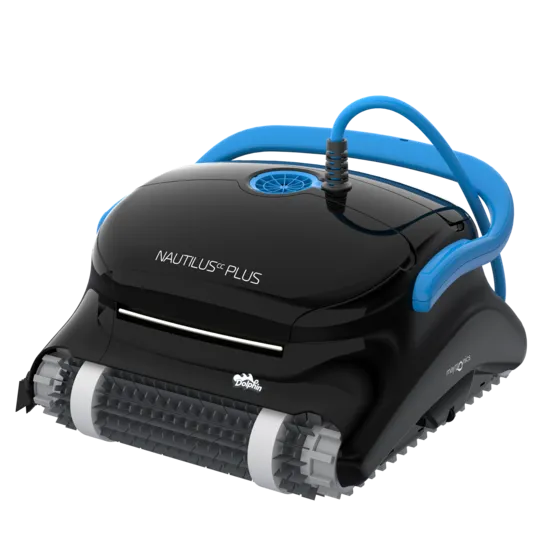
If you want specific model recommendations within each category, our main guide covers six robots across both types. The Beatbot AquaSense 2 Ultra and Aiper Scuba V3 represent premium and mid-range cordless picks. The Dolphin Nautilus CC Plus Wi-Fi is the proven corded value choice for inground pools.
For detailed feature comparisons, cleaning coverage, and independent test evidence, see our complete robotic pool cleaner guide .
Which should you buy?
Buy cordless when removing the cable improves how often you will actually use the robot, when surface skimming is a recurring task, and when you have a secure charging and storage routine. Accept that battery aging and heavier lifting are part of the trade.
Buy corded when predictable repeat cycles matter, when you prefer simpler long-term serviceability, when your pool layout supports sensible cable routing, and when you do not need surface-skim hardware.
Neither type is objectively better. The right choice depends on your pool, your maintenance routine, and whether the trade-offs of each design align with how you will use the robot over multiple seasons.